Rediscovering the known: the body we stopped using
Nostrils that switch, a jaw that didn't grow big enough, floor sitting for lower back pain, knees that stopped hurting after half a year of running, barefoot shoes, and what I do differently with my three young kids.
(I just wasn't aware of this at all)
A topic I've been quite interested in, not only since I have three young kids, but also for myself: breathing, jaw development. I've read a few books about this, and I think it's some evolutionary mismatch or so is the theory it's called. Since then, I've been iterating this same theme of not using your body the right way, leading to weakness. And I've been trying to apply this in other areas of my life.
This is an edited interview: the questions are there to push me, the answers are what I said, with the filler cut.
The short version
- The nose: you only ever breathe through one nostril, and they switch. Lying on my side with the one I want to open facing up unblocks it most of the time.
- The root: braces as a kid, a lower retainer that came loose and was never replaced. The book Jaws links soft food in childhood to jaws that don't grow big enough.
- What came back: floor sitting for lower back pain, running twice a week for 4 years (knee pain gone after about the first half year), barefoot shoes for 3–4 years.
- The catch: the first months hurt. I push through.
- The kids: floor, no chairs, barefoot shoes, chewier food, chewing gum, reminders to breathe through the nose.
Is this something everyone already knows?
Honestly, it's one of these things that I just did not know. That's the whole thing of this Learned Late, rediscovering the known blog. Maybe a lot of other people knew this. I didn't know this.
I'm finding this with many other people. I've told this story with the breathing in the nostrils to so many people, and so many people have been just blown away by this. They have no idea.
And so I'm the same. There's nothing that I used to believe. I just wasn't aware of this at all. And I think that is, to me, the most interesting part. This was never something that occurred to me even.
How did you find out your nostrils switch?
I figured out that I can't sleep over years very well, because whenever my left nostril is open, I can't breathe.
The other article already covers that quite well, but essentially I was breathing through my mouth a lot of the nights because I couldn't otherwise. And then I thought, okay, mouth breathing is not good. I put some tape on my mouth to make sure that my mouth stays closed. And some nights it would be fine. It worked really well. And some nights it wouldn't.
I think many people don't know that you only ever breathe through one nostril, except for when you're doing exercise, and your body maybe needs more oxygen. But I didn't know that. So I always thought my nose maybe doesn't work really well, or it was blocked. So I went through all sorts of nose blocking things, because I wanted to unblock the other nostril, to breathe through both.
Through researching exercises to unblock the nose, I came across this yoga thing or whatever, where someone was alternating the breathing. Then I stumbled on the fact that they switch.
I basically lay on the side with the nostril that I want to open facing upwards, and the arm underneath my head needs to be stretched out over the head. That seems to be the recipe where it unblocks pretty quickly, unless it has just switched not too long ago. The cycle seems to be like 6 hours or so at least. So if it just switched 30 minutes ago, it's harder to switch it back immediately.
And then I sleep better. So now my sleep has improved, at least the breathing part of it.
What does the book Jaws say about soft food and jaw development?
I think it is due to my jaw development, which then led me to reading books like Jaws, which explains that jaw development is linked to the food that you eat as a younger person. When you're still growing, if you eat soft food, your jaws don't develop that much.
I know that I had to get braces, and there's that retainer that they put in after they take the braces out. The retainer on my lower jaw has come loose, and I've never replaced it. And now my teeth are crooked again, and they're slowly moving into this weird shape.
And I'll just live with it. I don't care. But it's something that seems so odd and unnatural. And when I read that book, it clicked with me.
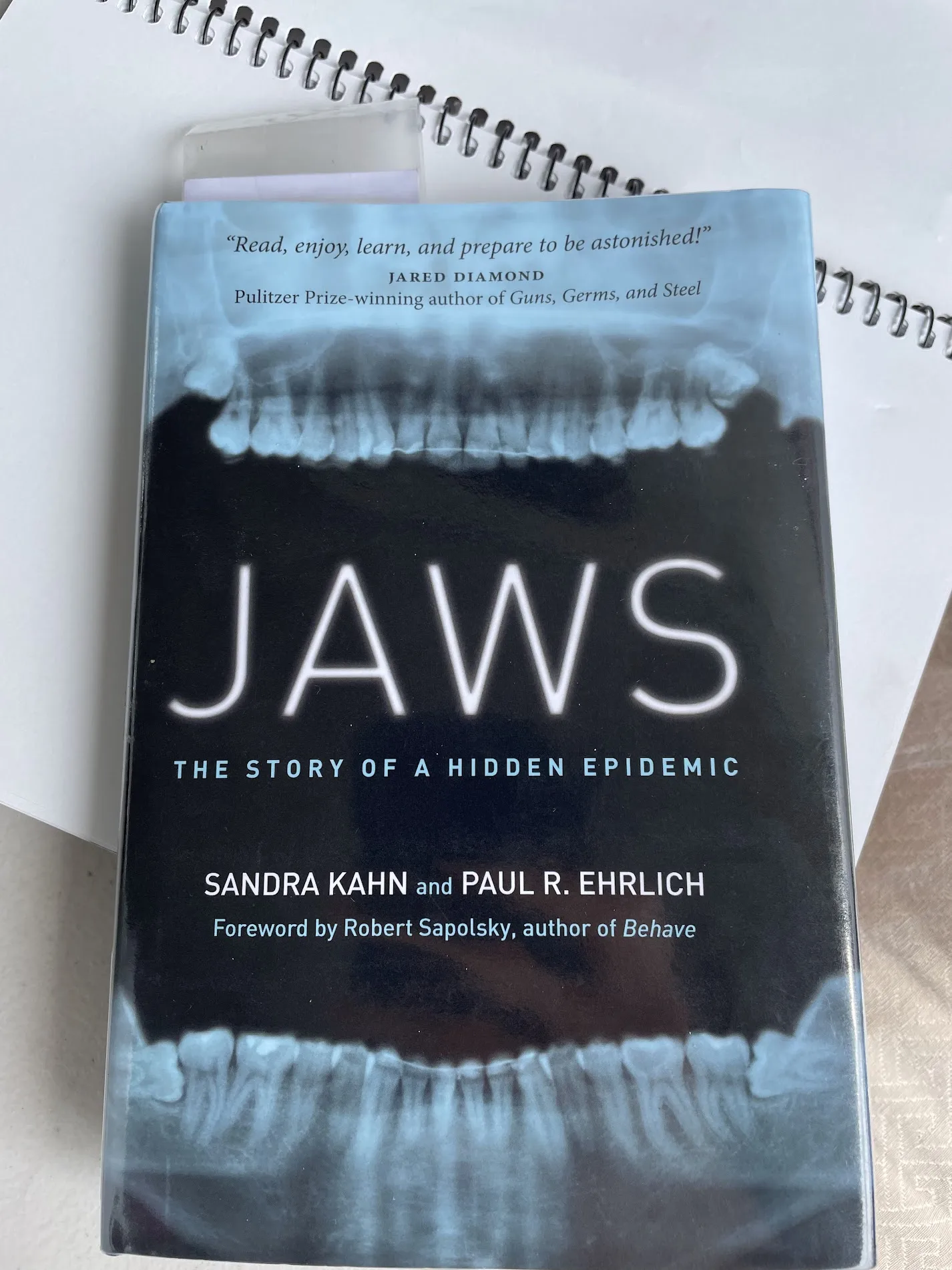
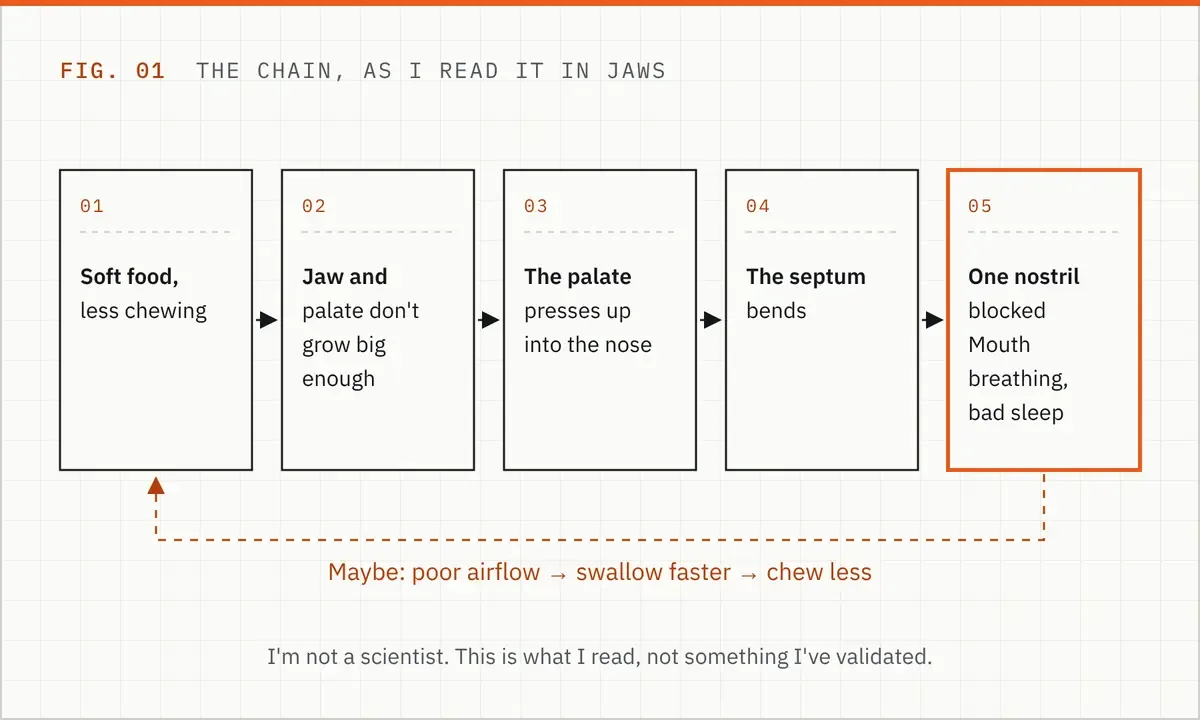
In that book, what they also mention is that the upper part of your mouth also develops a stronger arch if the bones don't grow big enough. And then that applies pressure on the nasal cavity upwards, and therefore can lead to that medical condition.
Now, I'm not a scientist at all. I haven't checked or validated this, and I don't know, but that's just what I read in the books and from various different other sources.
It essentially applies pressure to your nose and therefore bends your septum. And that all makes perfect sense if I look at it in my body. The septum on my right nostril is the point where it's bent away from more airflow, and the left side is where it's bent into less airflow.
And maybe there's even a correlation between the airflow that you're getting, and if it's poor, you tend to swallow your food faster, which leads to a vicious cycle of chewing less and then developing your jaw less when you're a kid.
Can you still change your jaw as an adult?
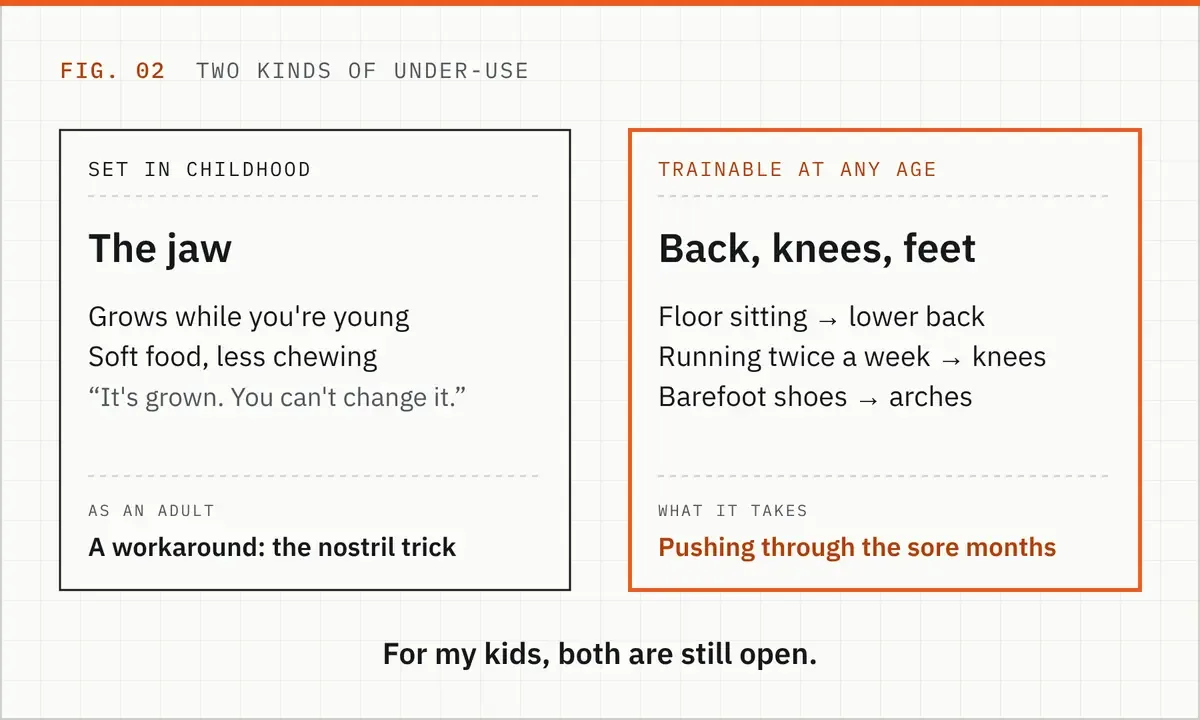
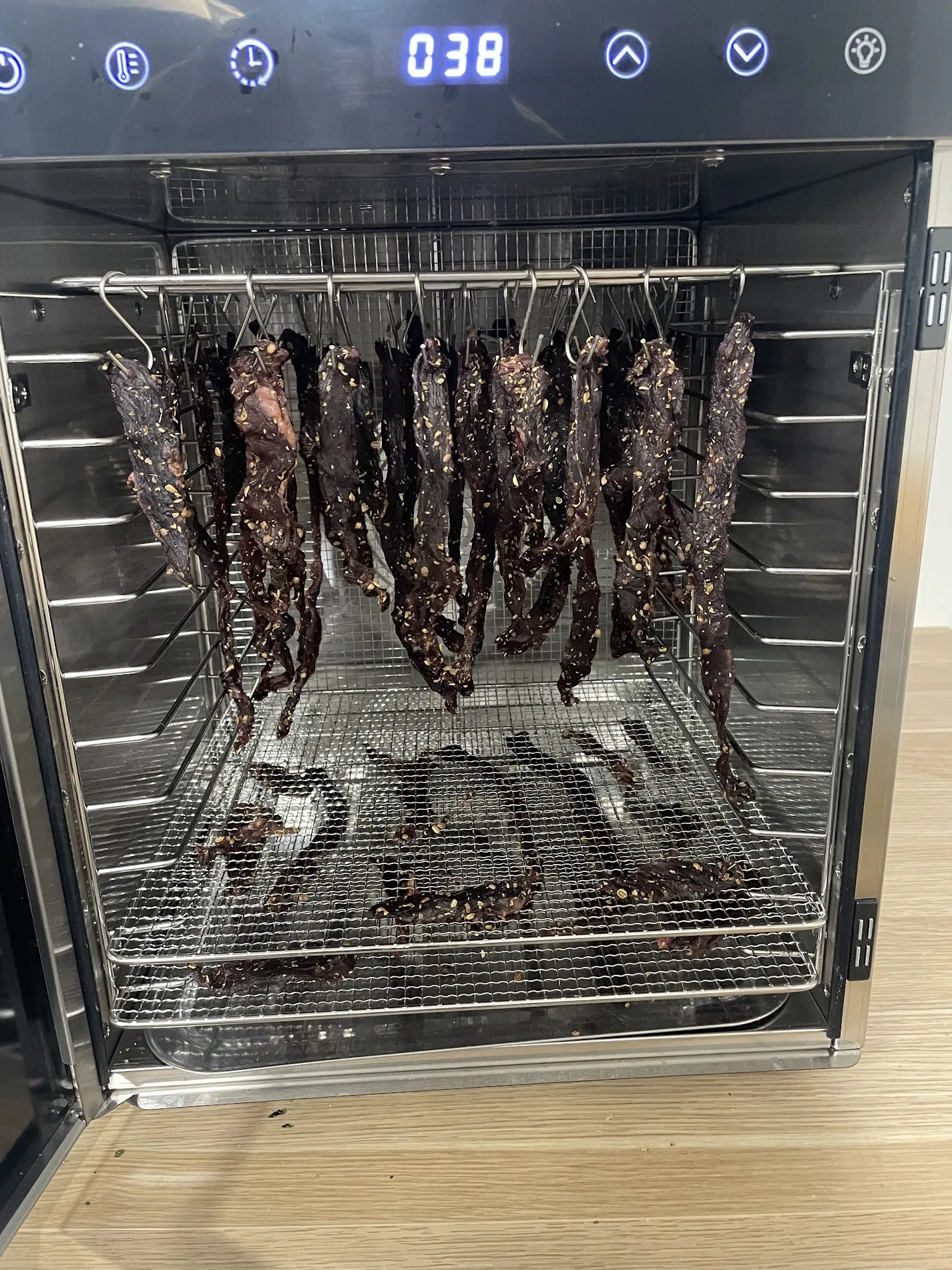
So I think it's just a normal thing. You can't do anything about it, really. Most people have that, where their jaws today don't grow big enough because they don't chew enough. And it's really hard to force yourself to do it. What are you going to eat biltong all day or chew on tubers? We can't do that anymore.
When you're grown up, there's nothing you can do about it. It's grown. You can't change it.
Can sitting on the floor fix lower back pain?
I've got another article already that I've written about this on sitting on the floor. And since I've been doing it, my lower back pain has been going away. I actually see it as a relief for me.
I'll say I've got some lower back pain through whatever, sitting on a desk chair or carrying a baby in a front pouch. I get it. I know that I need to sit on the floor and work on the floor a little bit, or just sit with the kids for a little bit. And that then is kind of like a workout for my lower back to strengthen it again. And maybe the muscle get a little bit stiff, and I'm just increasing that flexibility in my body.
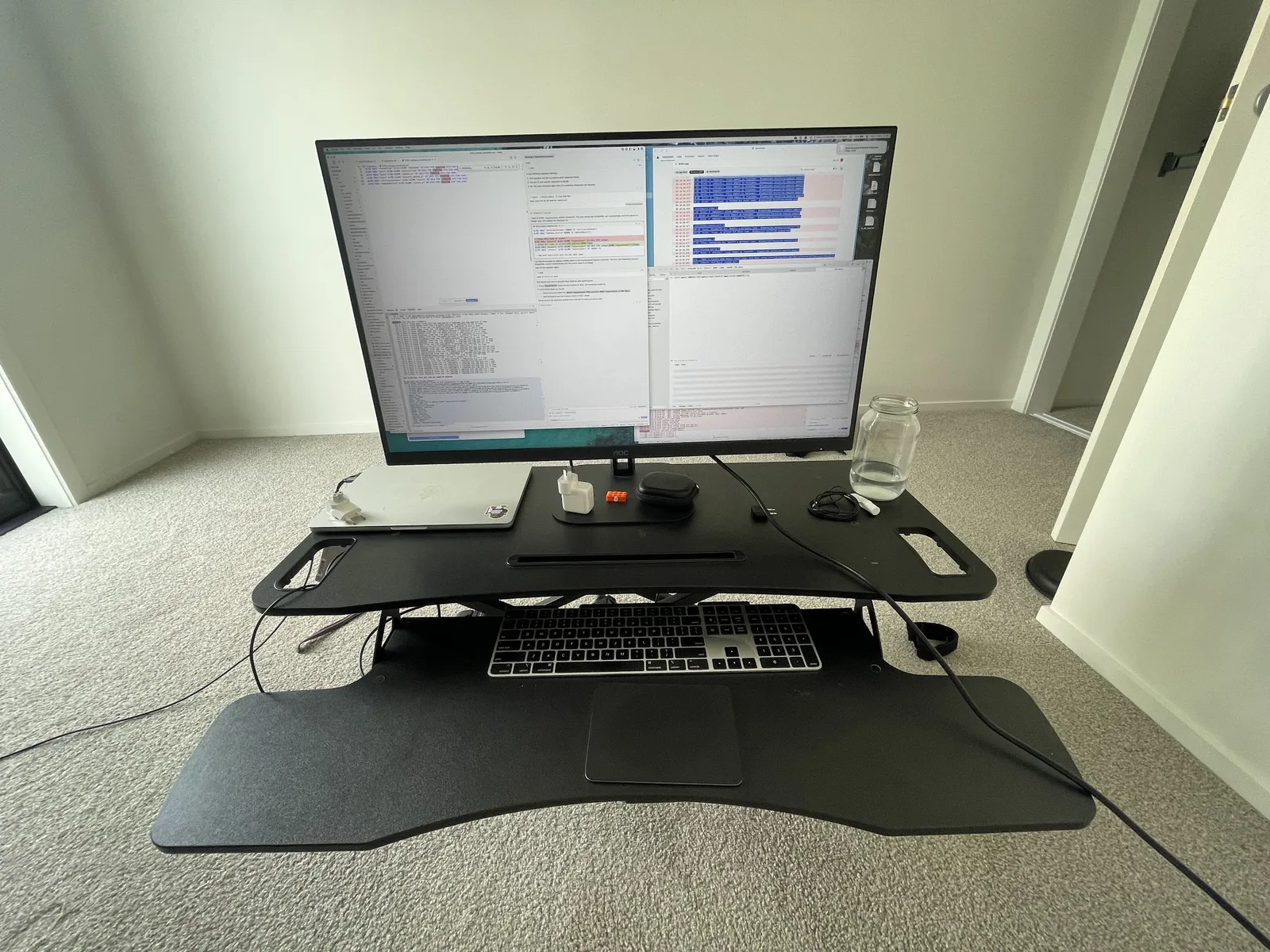
And that's something that I've also learned, and it kind of fits into that theme for me. If you're somehow weak, you will run into problems. And since then, I'm trying to see the world through that.
Does knee pain from running go away?
I still don't like running very much, but I do it twice a week for the last 4 years. And the first half year or so, my knees would hurt occasionally. But then over time it stopped. Now I don't get knee pain at all anymore while running.
And I think it is because the muscle structure in my knees has now developed to a point where it can absorb the shocks much better, and the shocks don't hit what hurts, which is probably the ligament, the bones, whatever it might be.
Do barefoot shoes strengthen your foot arches?
I've been always walking barefoot a lot at home, and we've switched to barefoot shoes like 3-4 years ago. Maybe that's related. I always run barefoot or in these shoes.
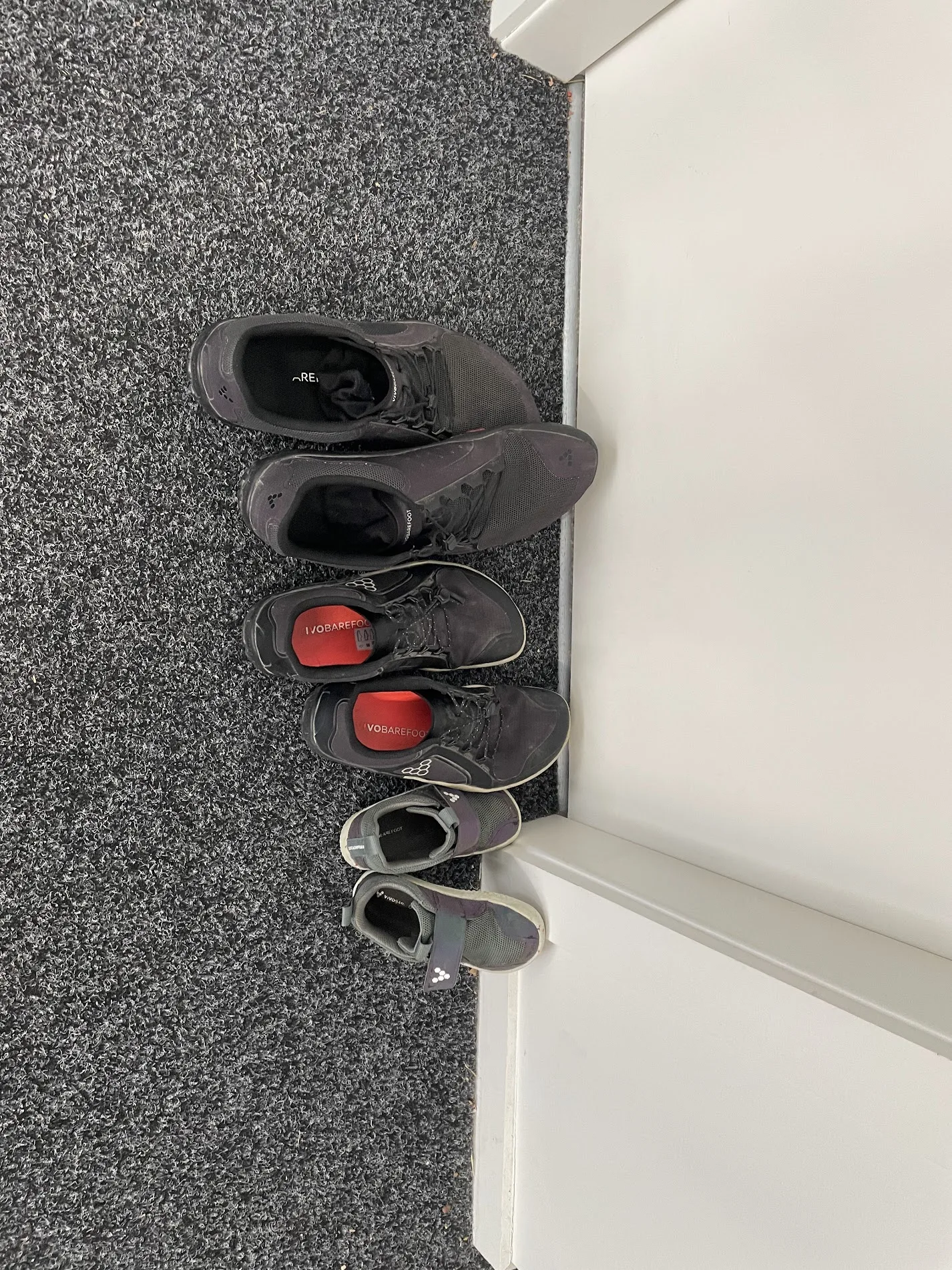
And I feel like that foot arch thing is another one of these things where, maybe if you've had arch support your whole life, then the muscle of your foot arch is so deteriorated that you cannot go back easily without a lot of pain.
But if you never use that support and you make sure that you walk a lot, i.e. you're not weak, you're putting your body under the normal stress that it is supposed to be under, then you run into way less problems.
How do you get through the painful first months?
My knees hurt for about the first half year of running. What would you tell a friend who tries barefoot shoes, gets sore feet in week two and decides it's nonsense?
Well, I personally pushed through, and I would recommend to everyone to also do that. Because if you don't, you're basically weak your whole life and reliant on quote-unquote life support. Not exactly life support, not in that dramatic sense, but you will need to always deal maybe with lower back pain, or you can't sit in front of the computer, or you have pain when you're walking. Or you can't do hikes anymore, and your body deteriorates because you're weak. You don't have the muscle that needs to support your body.
So I'd recommend to anyone to push through. It's the same with exercising. If your doctor tells you to go and exercise, the first couple of times will be hard. If you work out for half an hour, even if it's very gentle and light, you will feel it if you don't do anything at all, ever. But if you continue to push through, after 4, 5, 6 months, you will see progress, and it will be less painful. It'll be easier.
And then you can push yourself to new levels, of course, and it'll be painful again, but the more general part will then get easier.
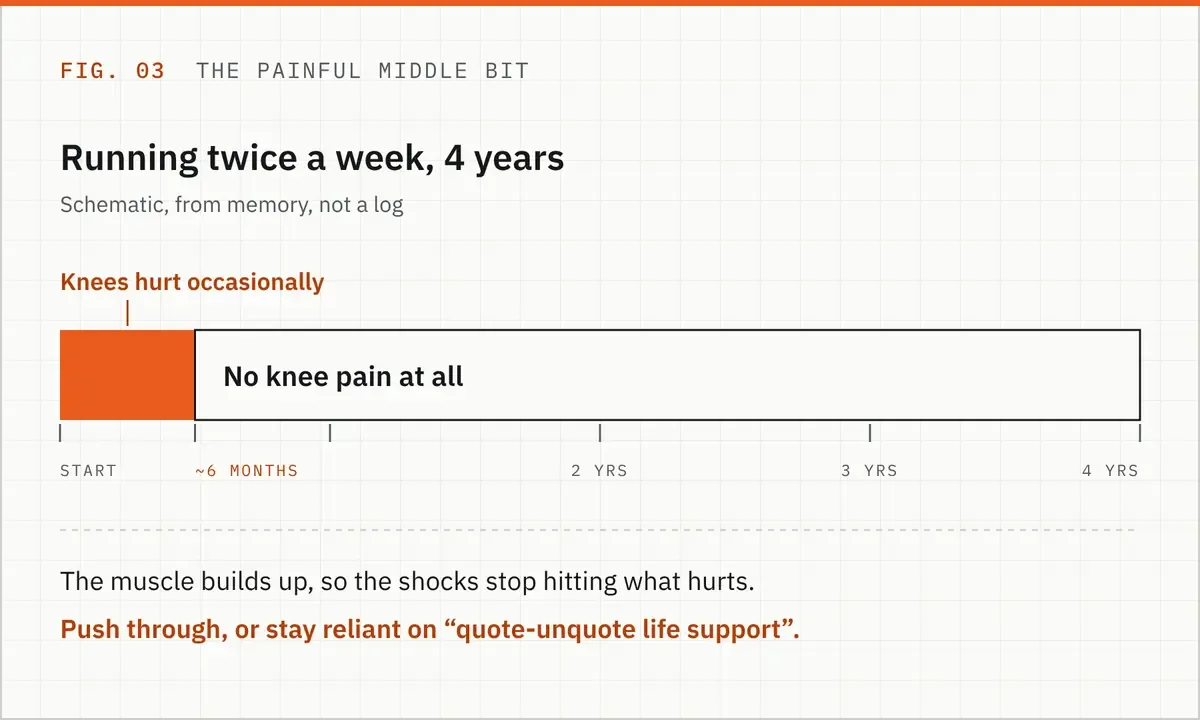
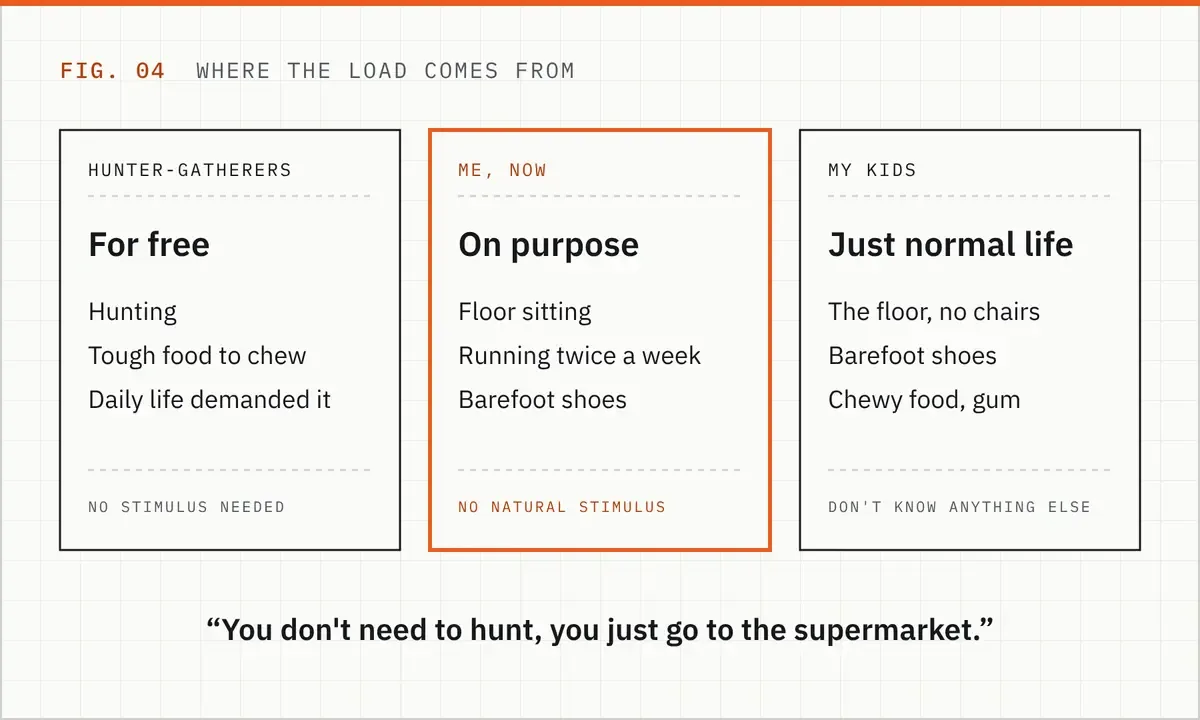
And that's, I think, the whole deal of it. You put yourself through that little bit, which we seem to need these days, whereas our hunter-gatherer ancestors didn't need to, because it was just a normal thing that you would do. You have to force yourself to do it these days, because there's no natural stimulus to do it. You don't need to hunt, you just go to the supermarket.
Is there anywhere you wouldn't take the support away?
Modern life is full of support: soft food, chairs, cushioned shoes, braces.
I honestly haven't found any area where I do that. And I'm not trying to do this all in a way where it would be in any way harmful. I'm not saying we should move back into a cave and be hunter-gatherers again, but there seems to be lots and lots of evidence of this being just net beneficial.
I think there's studies out there for short-sightedness, myopia, where if you spend more time outside in the sunlight, it doesn't develop as quickly because your eyes evolve and change differently. So the eyes, in a way, here are also a muscle, and the muscle develops better or more if you use it in a certain way, outside, sunlight, etc. I don't know the exact details of this.
But I think there's so many more cases where this kind of stuff is just actually beneficial. So I don't think I'm harming my kids with anything here that I'm doing. It just seems like a natural good thing to do. And everybody seems to be on board with spending more time outdoors. Everybody seems to agree with that. So why not also use barefoot shoes or eat tougher food?
What does this look like for young kids day to day?
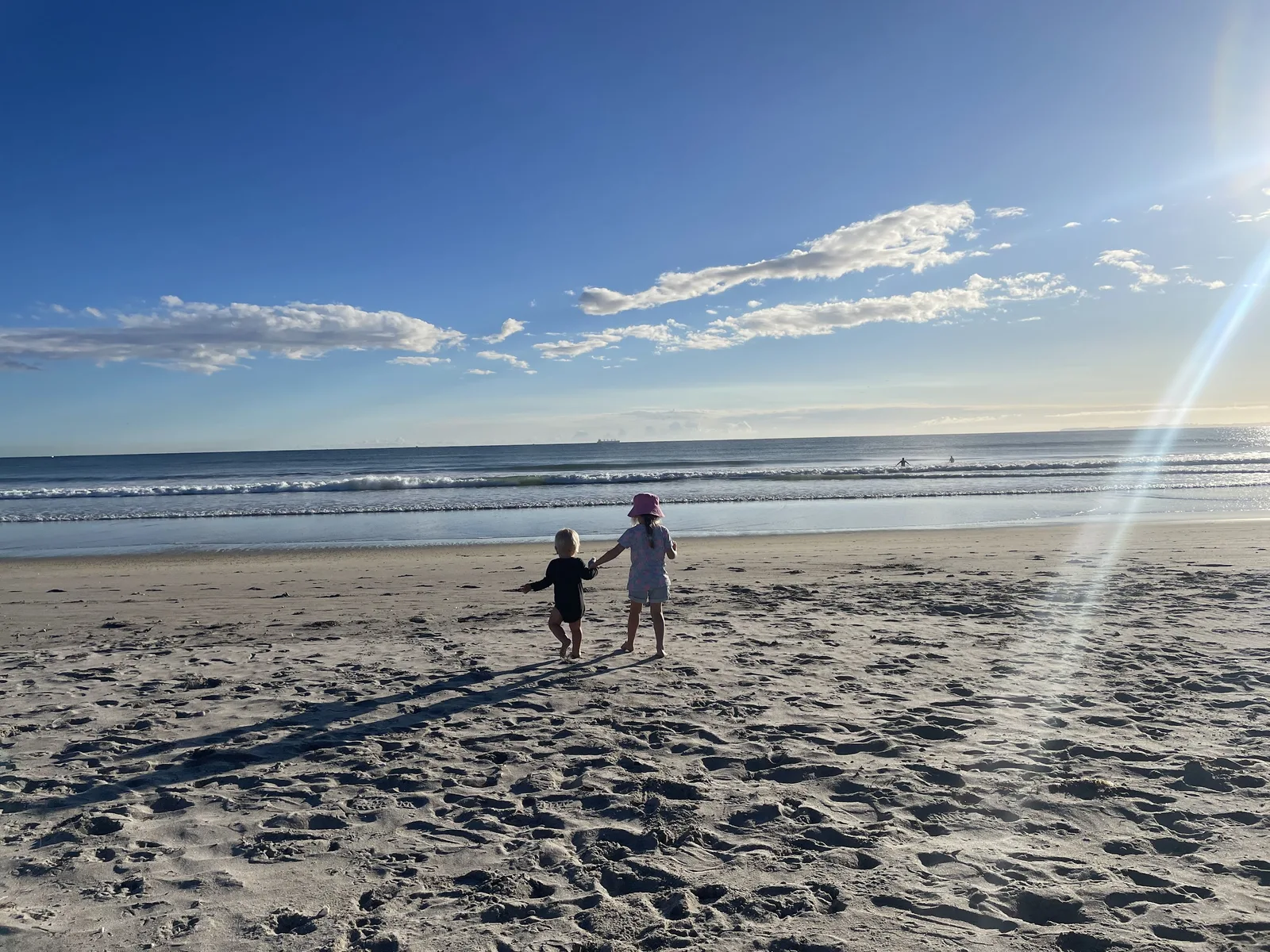
For them, it's even easier, especially at a young age. They don't know anything else. They want to sit on the floor. I'm not going to give them any chairs. They don't need to, or if they're still young.
And they also don't know any shoes, or we buy barefoot shoes for them. I mean, they want Crocs like all the kids do, but we resist. And I think that's normal. You can't get everything that you want as a kid or as an adult.
How do you get kids to breathe through their nose and chew more?
It's pretty hard, and I'm not perfect here, but I'm trying to make them aware of it. Whenever I see them breathing through their mouth, I tell them to shut their mouth and breathe through their nose. I try to make them aware that nose breathing is much better. My six-year-old gets it, understands it, still doesn't do it all the time.
I'm just more aware with food, trying to serve them maybe more chewy food. We always have chewing gums at home. They're not super tough, but I think it's just additional time of chewing that might help.
And maybe later, we'll have to get into some exercises from Mike Mew, who came up with the mewing topic. Maybe that's something we need to do later on, but I haven't started that yet.
What else don't you know about yet?
So anyway, I think that's sort of the theme that I've been absolutely fascinated by, and thinking about what other areas in my life would help me or my kids with just improving, less pain, better life.
The most interesting thing for me is basically, what other areas do I not know about that I might discover in the future? They'd be like, oh shit, I should have done this my whole life.
Get the next entry
New essays by email. No schedule, no spam. You confirm once.