Roast or brew: who do you blame?
When a home-roasted pour-over tastes off, it could be the roast, the brew or the green beans. Matt Perger's downward spiral, applied to home roasting, and why taking good notes by voice might be all a home roaster needs.
(Matt Perger's spiral, applied to home roasting and pour-over)
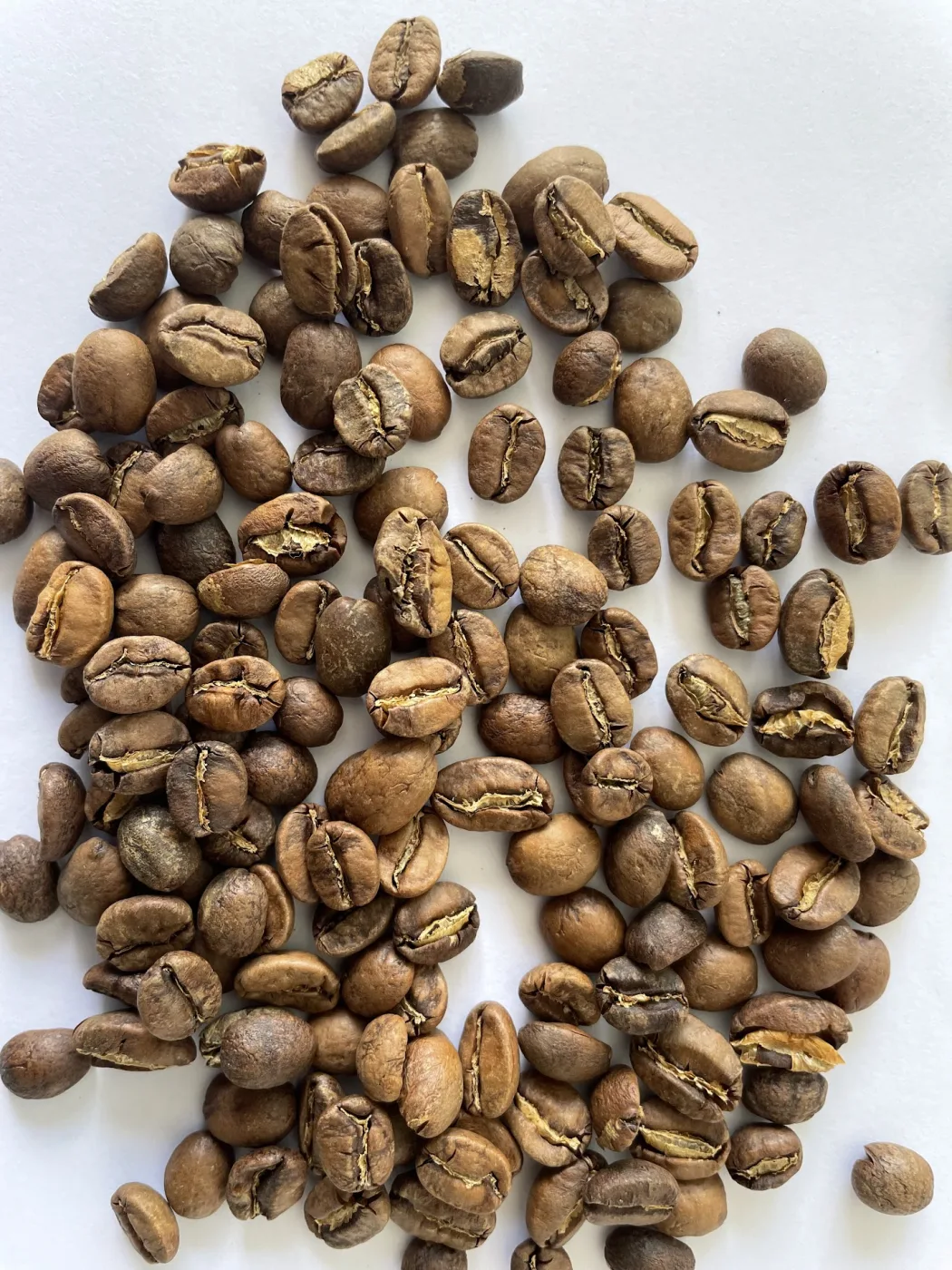
The first sip is really intense strawberry yogurt. The next part is a little bit astringent.
So how do you pinpoint that? Do you reduce the water temperature? Try a different grind size? Or is it the roast?
When you roast and brew your own coffee, there are so many things to blame and get right. It's never really that clear.
And if you pick the wrong one, the next cup can get worse.
The spiral
Matt Perger, the coffee guy from Australia, wrote a post called The Downward Spiral of Death. It's about espresso. A barista relies only on their palate instead of measuring extraction, mistakes strength for body and sourness for acidity, and adjusts the wrong thing. With a roaster in the loop it gets worse: roast darker, pull shorter, repeat.
His fix is a refractometer. Measuring extraction, he writes, "immediately points the finger of blame at the roaster."
I don't make espresso. I roast at home and brew pour-over, but I think the same thing happens there.
With my first set of beans I had so many iterations. I'd go back and forth on different roast parameters and different brew parameters and never get to perfect, except maybe on the very last roast. It feels like I figured out the right recipe and the right roast almost by chance. Before that I was on the fence, thinking maybe the green beans just weren't that good (the bean sets the bar).
So there are actually three suspects: the roast, the brew and the green itself.
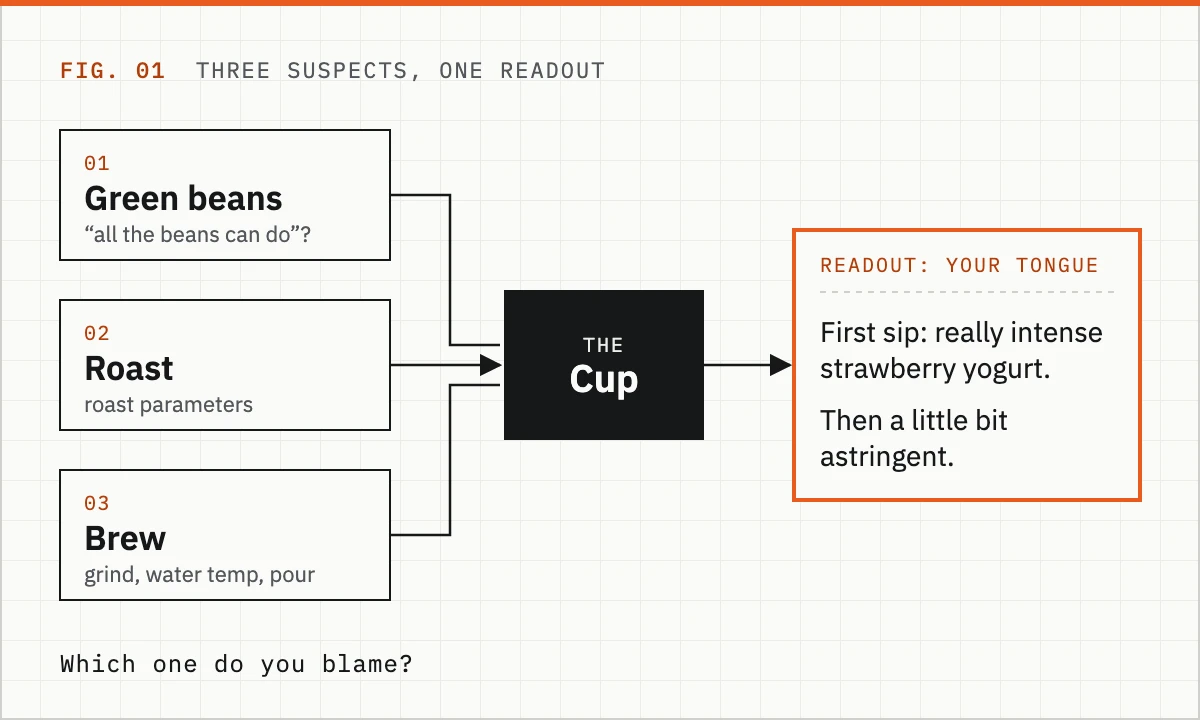
I'm not sure "death spiral" is even the right name for what happens at home. Sometimes it doesn't get worse. You decide "that's maybe all the beans can do", stop pointing at the roast, and end up with an average coffee that a pro roaster could have turned into an amazing one.
You forget
The bigger problem for me is more basic.
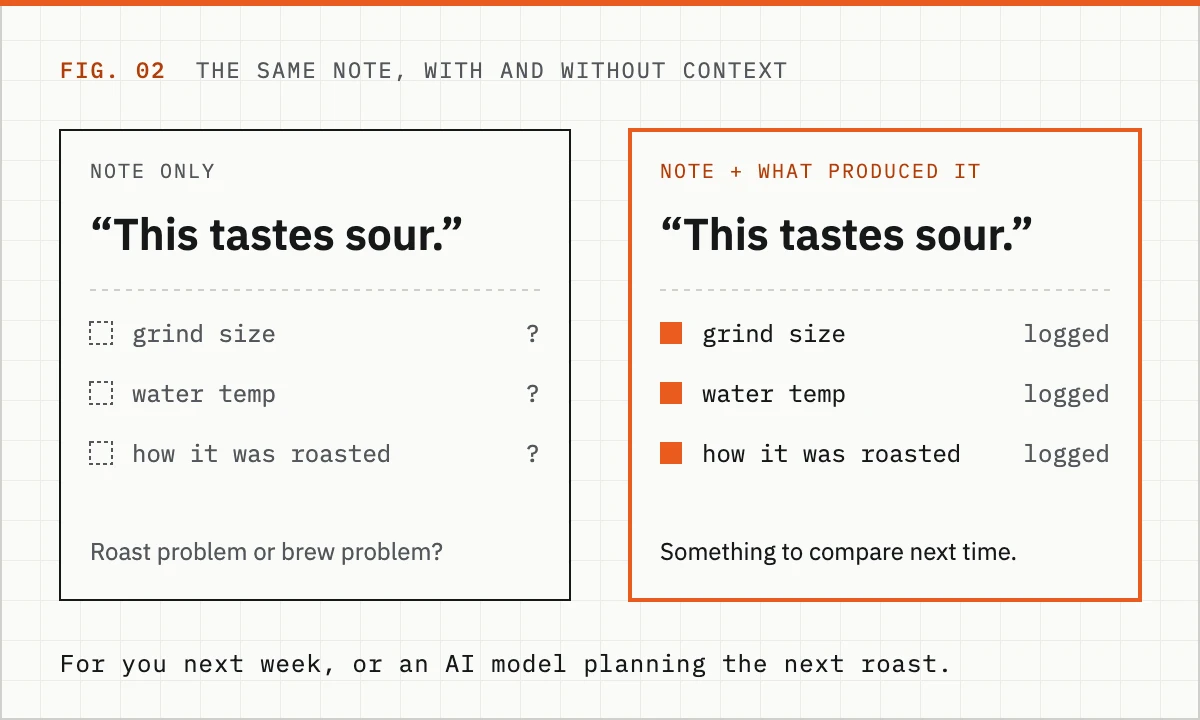
With a bunch of different coffees on the shelf, you forget how you did it the last time and how it tasted the last time. You don't remember the parameters exactly. You just say "this tastes sour".
On its own, that doesn't tell anyone much. Was I not grinding fine enough (too coarse is sour)? Was the water too hot? The context is missing if you don't log every little bit down. That goes for me next week, and for an AI model planning the next roast.
Cupping at home used to mean post-its and notes. Really annoying.
What you can actually control
Logging doesn't make a hand pour repeatable. Unless you're in a scientific environment where the pour is the same every single time, you can't really reproduce it. Pour structure, a bit of accidental agitation, the water temperature, all of that kind of stuff moves.
It's just the question of what you can actually control. You can't control everything, but maybe you can get better at this by just logging these few parameters.
Pros already do this. Professional roasters and green bean buyers have all these sheets and go through them meticulously: what it tasted like, how they roasted it, how they tried it. As a home roaster, you don't do that. It's too much work.
What changed for me is voice to text. I try one of the coffees, open AI on my phone and just talk about how I like it, walking around with the cup or sitting on the couch. The agent can file that into the right places: how I roasted it, and how it tastes over time. The next time I discuss how to roast, it pulls all of that back up (77 roasts later has the workflow).
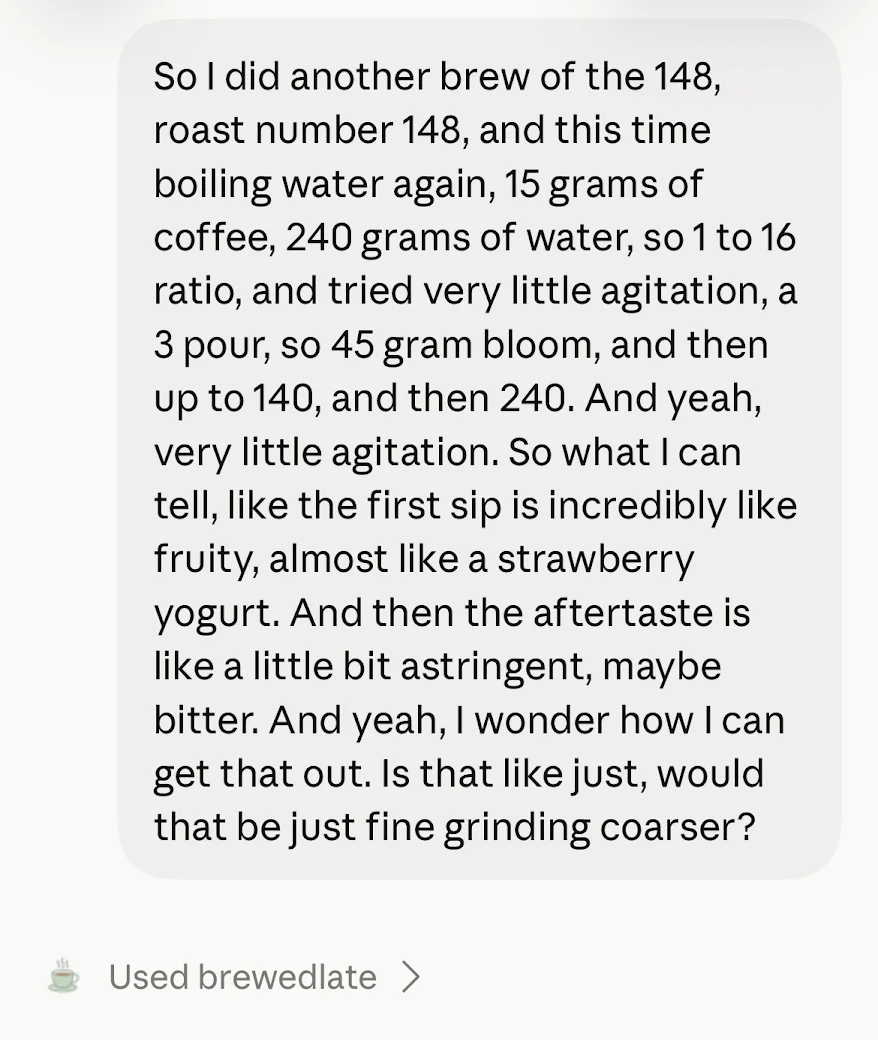
It's the same idea, but cheaper.
Not a substitute for measurement
To be fair to Perger, a log isn't a refractometer. "Strawberry yogurt, then astringent" is still my tongue, written down.
I don't have a refractometer, and I don't want to buy one. They're expensive devices. If you can get one, I'd recommend it to every home roaster. Maybe the pros need one, and they're on a different scale. But for a home roaster, maybe logging and taking good notes is all you need.
It doesn't fully solve the problem either. If a cup tastes like strawberry yogurt, I think you've done a lot right and you're pretty close, so it's likely more the beans or the brew than the roast. That's a heuristic at best.
I don't have the perfect way to get to a perfect coffee. Collecting more data still seems better, and it helps shorten these iteration cycles.
Not that hard
Home roasting can be daunting. It certainly was for me. I thought this was something only professionals can do, and I never even thought of getting into it, because I didn't know you can buy these little devices. They're not that expensive.
Roasting a good cup of coffee is actually not that hard. You can figure this out. With the right structure and processes, you get to a pretty good cup pretty quickly.
Get the next entry
New essays by email. No schedule, no spam. You confirm once.